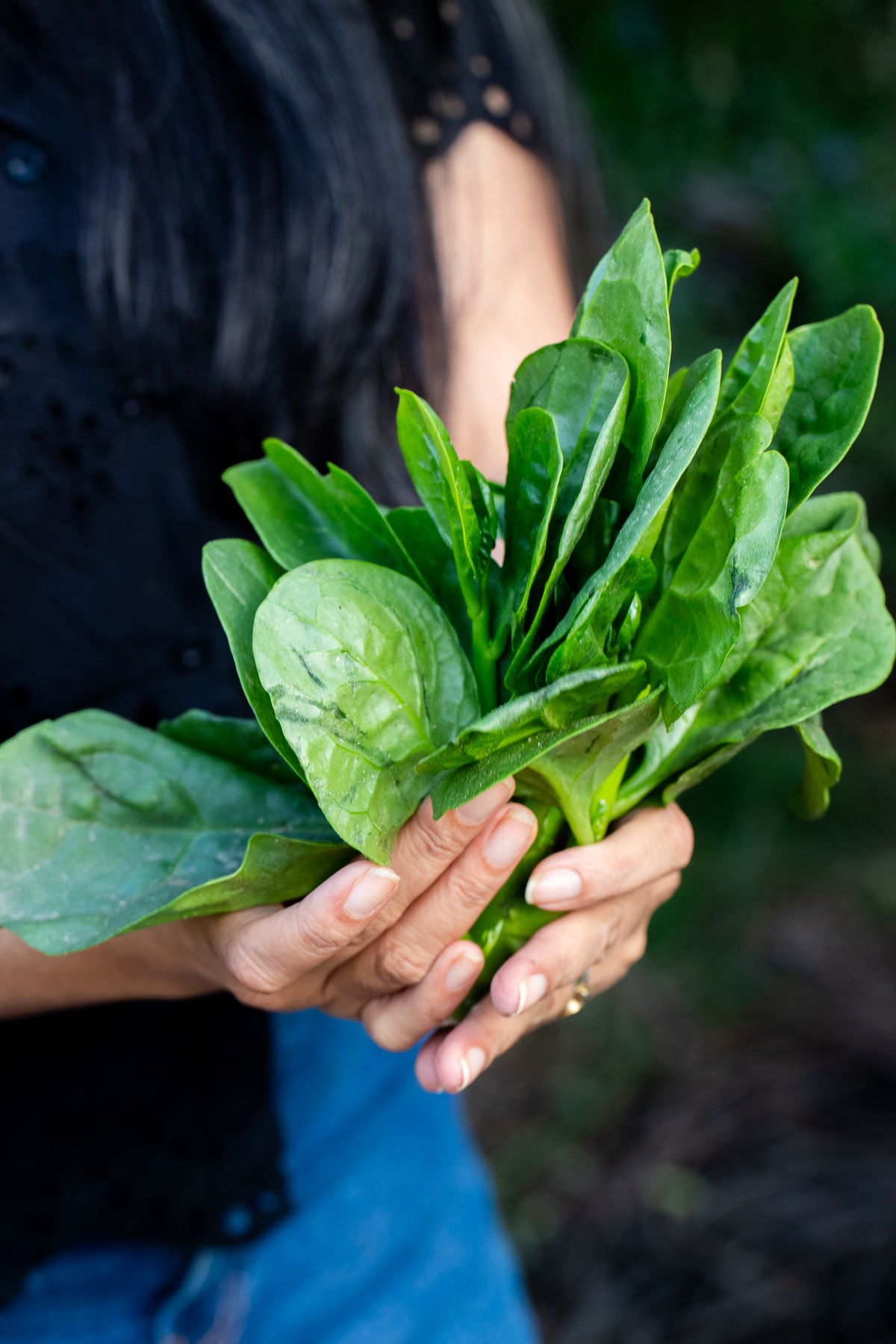
Poi Saag, Malabar Spinach (Basella alba)

$4.49
🌿
Non-GMO
🪴
Container Friendly
🌱
Direct Sow
☀️
Full Sun
🌾
Heirloom
2Y
Biennial
Seed
Seed packet

Ships in 1–3 business days.

Growing details

Malabar spinach — known across India as poi saag or valchi bhaji — is a tropical, heat-loving vine that produces thick, glossy green leaves with a mild, slightly peppery spinach flavor. Unlike true spinach, which fades in hot weather, poi saag thrives in the warm, humid months, climbing beautifully along trellises and fences.

This Basella rubra “red-stem” type adds striking color to the garden, with deep magenta vines and succulent leaves that stay tender even in midsummer heat. The flavor and texture hold up well in sautés, dals, and curries — especially in coastal and South-Indian recipes where poi saag is a beloved summer green.


Also known as: Ceylon Spinach, Vine Spinach, Poi saag, Basale soppu, Valchi bhaji
Hindi/Bengali name: Poi saag (पोई साग)
Marathi name: Valchi bhaji
Kannada name: Basale soppu
Type: Warm-season leafy vegetable / vining spinach

Why Indian Gardeners in California Should Grow It

For Indian cooks in California, poi saag is the answer to summer’s biggest garden gap — fresh leafy greens when methi, palak, and rajgira all bolt in the heat.

  • Culturally rooted: Common in Bengali, Goan, and South-Indian kitchens — used in dishes like poi saag dal, valchi bhaji amti, or lightly sautéed with garlic and chilies.

  • Heat-tolerant: Loves warm weather and humidity; keeps producing when other greens wilt.

  • Beautiful and edible: Red stems and lush foliage make it both ornamental and practical.

  • Continuous harvest: Snip tender shoots regularly to encourage branching and new growth.

In California, it grows exceptionally well through late spring to fall, especially with regular watering and something to climb on.


Growing Information

Malabar spinach grows best in full sun to partial shade, rich soil, and consistent moisture. It’s a tropical perennial often grown as an annual vine in cooler climates. Sow seeds after the danger of frost has passed, when daytime highs are above 70 °F (21 °C) — typically April through August in most of California.

Sowing depth: ¼ inch (6 mm).
Germination: 10–20 days in warm soil (can be sped up by soaking seeds overnight).
Keep the soil evenly moist during germination — warmth and patience are key; seeds are slow to sprout in cool conditions.

Provide a trellis or fence for support; vines can reach 6–10 ft tall. Harvest young leaves and tender shoots frequently to keep growth compact and tender. Older stems can be tougher but still delicious when cooked.

Malabar spinach prefers consistent watering and light feeding with compost or seaweed fertilizer through the growing season. In coastal or humid areas, it can survive year-round; inland gardeners can grow it as a summer annual.


Harvest & Use

Begin harvesting tender shoots once plants are about 8–10 inches tall. Pinch off tips regularly to encourage side branching. The leaves are thick and slightly mucilaginous — perfect for softening dals, curries, and soups.

Use it anywhere you’d use spinach or methi, but especially in dishes that benefit from its silky texture:

  • Poi saag dal (Bengali-style with red lentils)

  • Valchi bhaji amti (Goan-Maharashtrian curry)

  • Basale soppu saru (Karnataka-style tamarind curry)

Leaves can also be added raw to smoothies or lightly blanched for salads in fusion dishes.


Quick Facts

  • Botanical name: Basella alba / Basella rubra

  • Common Indian names: Poi saag, Valchi bhaji, Basale soppu

  • Type: Tropical leafy vine

  • Sun: Full sun to partial shade

  • Days to germination: 10–20

  • Days to harvest: 60–70

  • Sowing depth: ¼ inch (6 mm)

  • Spacing: 12–18 inches apart

  • Support: Trellis or fence

  • Best season (California): Late spring – early fall