Grower’s Corner
How to Grow Bottle Gourd (Lauki / Dudhi) in Southern California
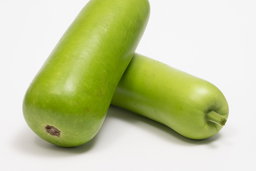
If you want a crop that produces heavily with the right setup, bottle gourd is hard to beat.
Lauki (also called dudhi or opo squash) is one of the most productive summer vines you can grow in Southern California if you get the timing right. When people struggle with it here, it’s usually because of when they planted it.
Bottle gourd also has a strange and fascinating history. It’s one of the few plants that existed in both the Old World and the Americas before Columbus. The prevailing theory is that mature gourds floated across oceans and remained viable. That tells you something important: this is a plant built to survive.
In the garden, that shows up as vigor. Once established, lauki grows fast, climbs aggressively, and produces heavily.
Quick Start (Southern California)
• Plant when nights stay above 55–60°F
• Use a strong trellis (not optional)
• Expect slow early growth
• Fruit set improves with warm nights
What to Know About How Lauki Grows
Lauki is a true heat-loving vine.
This is where most advice breaks down in Southern California. People focus on frost. That’s not the limiting factor here, night temperatures are.
- Growth slows below ~55°F nights
- Flowering and fruit set really begin once nights are consistently above ~60°F
- Warm days alone are not enough
This is why people plant early, see some vine growth, and then get little to no fruit.
In inland areas like the San Gabriel Valley, you’ll hit these conditions earlier. Along the coast, you can be weeks behind even when daytime weather looks ready.
Once it’s happy, lauki behaves like any aggressive cucurbit:
- Fast vine growth
- Large leaves
- Heavy production
- Needs structure and space
Trellising: Don’t Skip This
Lauki doesn’t just prefer a trellis. It performs dramatically better with one.
If you’re planning your setup, build the structure first, then plant. Lauki grows fast once it’s established, especially from vigorous, heat-adapted seeds.
If you grow it on the ground, you’ll still get something. But you’ll also get:
- More disease pressure
- Misshapen fruit
- Lower yields
A vertical setup gives you:
- Straighter gourds
- Better airflow
- Cleaner fruit
- Higher production per square foot
What works well:
- Cattle panels (best overall, if you can transport them)
- Remesh from Home Depot (very practical option)
- Pergolas or arches (excellent for home gardens)
- DIY wood frames with wire (completely valid)
Build stronger than you think you need. This plant will test it.
And keep an eye on it—lauki will absolutely climb into nearby trees or your neighbor’s yard if you let it.
When to Plant (This Is the Whole Game)
If you’re planting in Southern California, start with lauki seeds selected for warm-season growing and wait for consistent warm nights. That one decision makes the biggest difference in your results.
I don’t like giving dates, because they’re wrong as often as they’re right.
Instead, use this rule:
Plant when night temperatures are consistently above 55–60°F.
That usually lines up with:
- Inland Southern California: late April → early May
- Coastal areas: mid May → June
If you want to plant earlier, you can, but you need to be deliberate:
- Watch the forecast, not the calendar
- Check soil warmth (you want it genuinely warm, not just “spring”)
- Accept that early plants may sit still for a while
You can plant in February in a warm year. But that’s a judgment call, not a baseline recommendation.
For soil warmth, you can take your own readings with a soil thermometer. Or I often consult soil temperature charts online. The only problem with using online charts is that they cover a large area, at least a full zip code, that may have varying temperatures within. So be sure to adjust depending on if you think you are in one of the warmer or cooler parts of your region.
The common mistake:
Planting into warm days and cool nights → vines stall → delayed or weak fruiting.
Pollination: Why Flowers Fall Off
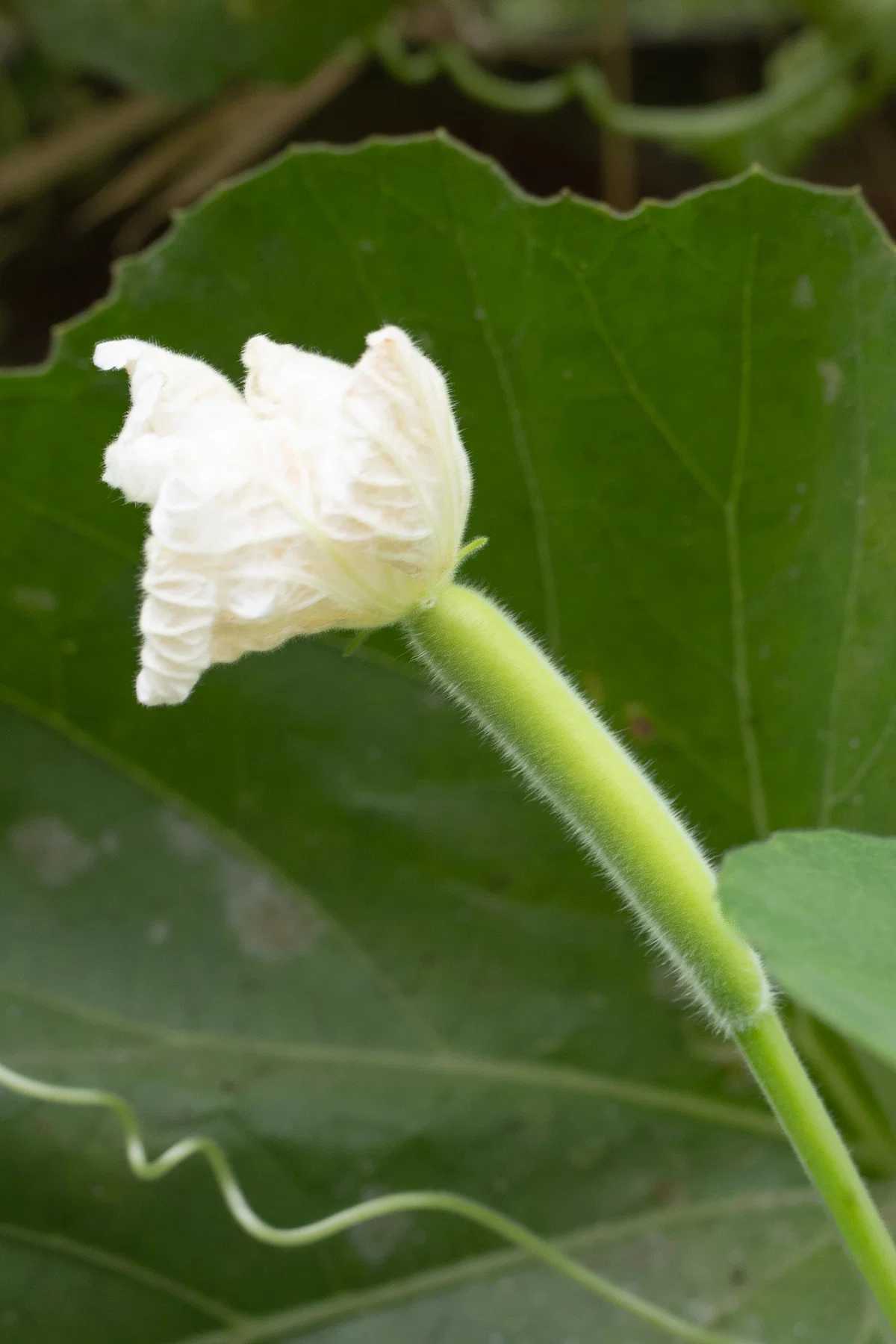
Lauki produces separate male and female flowers, and pollination happens at night or very early in the morning. Early on, the plant produces mostly male flowers, so you won’t see fruit right away. Combined with cool nights and low pollinator activity, early flowers often don’t set fruit.
Early in the season, especially when nights are still cool, you’ll often see:
- Flowers dropping
- Tiny fruits form then shrivel
That’s not a nutrient issue, it’s failed pollination.
What helps:
- Give the plant time, this usually resolves as nights warm up
- Hand-pollinate if needed (transfer pollen from male to female flowers)
- Focus on timing more than inputs
Once conditions are right, fruit set increases quickly.
Water, Feeding, and Growth
Once established, lauki is not particularly fussy, but it is productive, so it needs consistency.
- Water: Deep and regular. Don’t let it swing between dry and saturated
- Feeding: Light nitrogen early, then balanced feeding once flowering starts
- Growth habit: Expect it to take space. Plan accordingly
If it looks like it’s “not doing much,” it’s usually just waiting for heat. When it gets it, growth accelerates fast.
Inland vs Coastal Timing (This Matters More Than You Think)
Most growing advice treats Southern California like one climate. It isn’t.
If you’re gardening inland, places like the San Gabriel Valley, Inland Empire, or anywhere that heats up early, your season starts sooner than you think. Soil warms faster, nights stabilize earlier, and heat-loving crops like lauki take off quickly. If you wait for “safe” planting dates you found online, you’re probably leaving weeks of growth on the table.
Along the coast, it’s the opposite problem. Air temperatures might look fine, but the soil lags behind. Marine layer, cool nights, and slower warming can stall seedlings or set them back. Planting too early here doesn’t kill the plant, it just keeps it sitting, not growing, until real heat arrives.
The mistake most people make is assuming timing is universal. It’s not. If you’re inland, you can push earlier than you think. If you’re coastal, patience pays off more than pushing it.
Getting Started
- Start with lauki seeds selected for warm-season growing
- Don’t rush planting, watch night temperatures
- Use a proper trellis from day one
- Expect a slow start, then rapid growth
Once you dial this in, lauki is the kind of crop you’ll grow every year without thinking twice.

About the author
Steve Thomas-Patelis a California home gardener who grows Indian kitchen crops for his family in a backyard test garden. He writes about his gardening experiments at MySoCalGarden and for Masala Central's Grower's Corner.